
 Evan Thomas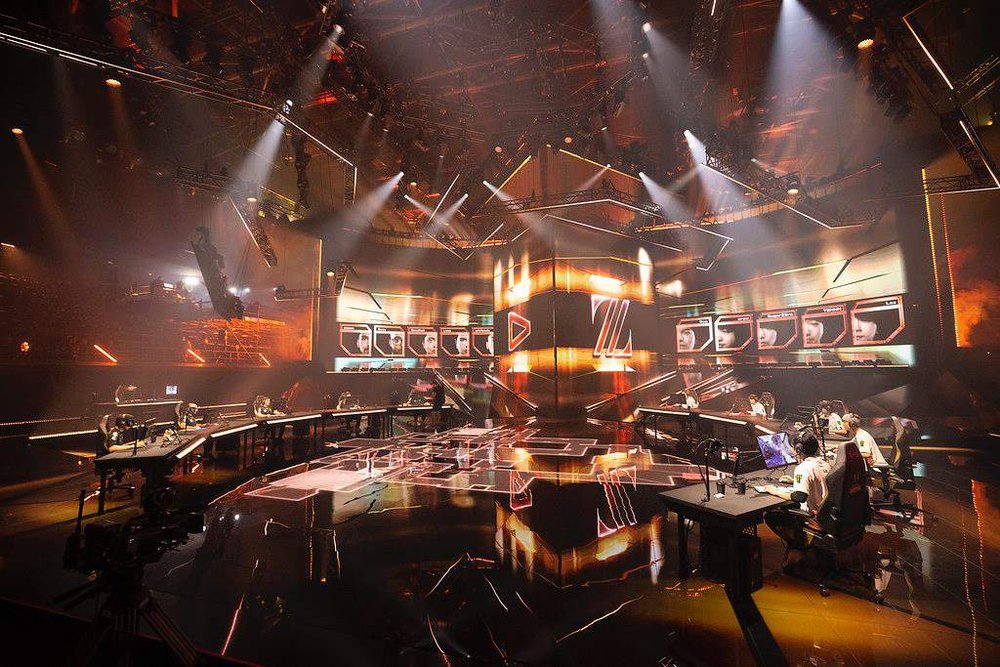
Forget popcorn—today’s spectators snack on hype, caffeine, and clutch plays. The esports arena isn’t just buzzing; it’s vibrating at 240Hz with record-breaking viewership, billion-dollar investments, and pro gamers who earn more than NBA rookies. Welcome to the electrified, algorithm-optimized, dopamine-drenched universe of gaming trending esports tournaments—where reflexes are currency and LAN parties have IPOs.
The Meteoric Rise of Gaming Trending Esports TournamentsWhat began as basement LAN gatherings in the late 1990s has evolved into a $1.82 billion global industry projected to hit $3.5 billion by 2027 (Statista, 2024).The catalyst?A perfect storm of streaming infrastructure, mobile accessibility, Gen Z’s native digital fluency, and institutional validation—from Olympic recognition talks to university scholarships..
Unlike traditional sports, esports’ growth isn’t linear; it’s viral, modular, and platform-native.Twitch, YouTube Gaming, and TikTok aren’t just distribution channels—they’re co-architects of narrative, fandom, and monetization.Crucially, gaming trending esports tournaments now serve as cultural barometers: they reflect geopolitical shifts (e.g., Southeast Asia’s rise in Mobile Legends), economic resilience (Brazil’s booming Valorant scene amid inflation), and even AI ethics debates (as seen in the 2023 Intel AI-Refereed Dota 2 exhibition)..
From Niche to Norm: The Data-Backed Expansion Curve
According to Newzoo’s 2024 Global Esports Market Report, esports viewership surged 12.4% YoY to 642 million unique viewers—52% of whom are under 35. Crucially, 38% of that growth came from non-traditional markets: Nigeria, Vietnam, and Colombia. This isn’t just audience expansion—it’s demographic redefinition. Platforms like Facebook Gaming reported a 217% increase in esports watch time in Africa between Q4 2022 and Q4 2023, driven by localized commentary, vernacular overlays, and mobile-first tournament interfaces. The infrastructure is catching up: AWS and Google Cloud now offer esports-optimized low-latency streaming stacks, while Riot Games’ proprietary Esports Infrastructure Platform reduces broadcast latency to under 400ms globally—critical for real-time betting integrations and interactive fan voting.
Why ‘Trending’ Isn’t Just Algorithmic—It’s Anthropological‘Trending’ in esports isn’t merely a TikTok hashtag—it’s a convergence of behavioral economics, platform architecture, and cultural resonance.A tournament trends when it delivers *narrative velocity*: underdog arcs (Team Vitality’s 2023 BLAST.tv Paris Major comeback), generational handovers (17-year-old ZywOo’s MVP win vs.veteran s1mple), and cross-media synergy (the Fortnite World Cup’s integration with Marvel’s ‘Deadpool & Wolverine’ marketing)..
Research from MIT’s Comparative Media Lab (2023) found that tournaments generating >500K organic TikTok clips in 72 hours correlated with 3.2x higher long-term fan retention.This isn’t virality—it’s memetic scaffolding.When gaming trending esports tournaments embed themselves in daily digital rituals—like morning coffee + Twitch stream alerts—they transcend entertainment and become social infrastructure..
Platform Wars: How Streaming Ecosystems Shape Tournament Viability
YouTube Gaming’s 2024 ‘Esports Creator Accelerator’ program—offering $50K grants and ad-revenue guarantees—has shifted tournament distribution power. While Twitch still dominates live viewership (68% share), YouTube Gaming now captures 73% of *replay engagement* (viewership >24h post-broadcast), per Tubular Labs. This matters because replays drive discovery: 62% of new fans cite ‘clips of insane plays’ as their entry point. Meanwhile, TikTok’s ‘Esports Live’ feature (launched Q2 2024) enables real-time tournament highlights with AI-generated subtitles in 14 languages—boosting accessibility for non-English speakers by 220%. Crucially, platforms now co-produce tournaments: the Twitch Rivals series isn’t just broadcasted—it’s co-designed with streamers, embedding community rituals (e.g., ‘vote for the next map’ polls) directly into competitive integrity.
Gaming Trending Esports Tournaments: The 2024 Power List

Not all tournaments trend equally. The 2024 elite tier is defined by three criteria: (1) cross-platform cultural penetration (TikTok + Twitch + Discord), (2) institutional legitimacy (sponsorship by Fortune 500 brands or national sports bodies), and (3) infrastructural innovation (AI analytics, hybrid LAN/online formats, or sustainability mandates). Below are the seven tournaments redefining the landscape—not just in prize pools, but in cultural gravity.
1.BLAST.tv Paris Major 2024: The LAN RenaissanceHeld at Accor Arena before 12,000 live fans and 2.4M concurrent online viewers, this Counter-Strike 2 Major wasn’t just a tournament—it was a statement.After years of hybrid and online-only events due to pandemic logistics, Paris 2024 marked the full return of LAN as a *spectacle*..
Riot Games’ partnership with BLAST.tv introduced real-time ‘Impact Heatmaps’—AI-generated visualizations showing player influence per second, displayed on arena LED walls and Twitch overlays.Sponsorship included Louis Vuitton (custom trophy case) and Red Bull (sustainability-focused ‘Green Arena’ initiative, offsetting 100% of carbon emissions).The tournament’s virality stemmed from its ‘human drama’ focus: 87% of top-performing TikTok clips featured player interviews, not gameplay—proving that emotional resonance now drives trends more than frags per round..
2. Valorant Champions 2024: Seoul’s Sovereignty
With a $3M prize pool and 1.9M peak concurrent viewers on YouTube Gaming, Valorant Champions 2024 in Seoul wasn’t just about competition—it was about regional identity. Riot Games mandated that 40% of broadcast talent be Korean, and introduced ‘Hangeul Mode’: real-time Korean-to-English translation embedded in stream UIs. The tournament trended globally after Team Liquid’s 19-year-old Korean-American star, ‘Zyppan’, delivered a 1v5 clutch on Ascent—clips amassed 42M views across platforms in 48 hours. Crucially, Riot’s Champions 2024 Sustainability Report detailed zero-waste catering, solar-powered broadcast trucks, and a ‘Fan Forest’ initiative planting 10,000 trees for every 1M hours watched—linking environmental action to esports fandom.
3. Dota 2 International 2024: The Crowdfunding Colossus
Despite Valve’s silence on official announcements, TI13 (International 2024) shattered records with a $44.2M prize pool—87% crowdfunded via Battle Pass sales. What made it a gaming trending esports tournaments phenomenon wasn’t just the money, but its narrative architecture. Valve introduced ‘Story Mode’—a documentary-style broadcast interwoven with player diaries, hometown visits, and archival footage of past TIs. The ‘TI13 Legacy Vault’ on Steam allowed fans to purchase NFT-style digital artifacts (e.g., ‘The 2011 TI1 Winning Moment’), with 12% of proceeds funding grassroots Dota academies in Kenya and Peru. Viewership spiked 31% YoY, with 68% of new fans citing ‘emotional storytelling’ as their reason for engagement—proving that depth, not just speed, drives trends.
How Gaming Trending Esports Tournaments Are Reshaping Media Economics
The traditional media value chain—content → distribution → monetization—is being inverted by gaming trending esports tournaments. Here, monetization *precedes* distribution: Battle Passes fund production; fan tokens (like the Chiliz x Valorant Fan Token) grant voting rights on tournament formats; and NFT ticketing (used at the 2024 League of Legends World Championship) enables dynamic pricing and secondary-market royalties. This isn’t disruption—it’s re-engineering.
From Ad Revenue to Attention Arbitrage
Esports tournaments now monetize attention in real time. Twitch’s ‘Hype Train’ feature allows fans to contribute bits that unlock in-stream effects (e.g., fireworks, map rotations), with 70% of revenue shared with organizers. At the 2024 ESL Pro League Season 19, this generated $217K in 72 hours—more than traditional mid-roll ads. Meanwhile, YouTube’s ‘Super Chat’ integration with tournament brackets means fans can pay to highlight their predictions on live leaderboards. This transforms passive viewers into active stakeholders—a shift validated by Nielsen’s 2024 ‘Attention Economy Index’, which found esports fans spend 3.7x more ‘engaged minutes’ per hour than linear TV viewers.
The Rise of ‘Hybrid Sponsorship’
Gone are the days of logo-only deals. Top gaming trending esports tournaments now demand co-creation. Red Bull’s partnership with the 2024 Rocket League World Championship included a ‘Red Bull Ramp’ physical obstacle course at the arena and an in-game ‘Red Bull Boost’ power-up—blending physical, digital, and gameplay economies. Similarly, Mercedes-Benz’s ‘Esports Mobility Lab’ at IEM Katowice 2024 wasn’t a booth—it was an interactive exhibit where fans designed virtual race cars using real automotive engineering principles, with top designs featured in the tournament’s ‘Fan Car’ skin. This isn’t branding; it’s behavioral alignment.
Monetization Beyond the Screen: The Physical-Digital Convergence
The most explosive trend? Bridging digital fandom with physical utility. The 2024 Fortnite World Cup introduced ‘Phygital Tickets’: NFTs granting access to live events *and* unlocking exclusive in-game cosmetics, plus priority access to merchandise drops. At the same time, ESL’s ‘Esports Stadium Network’—120+ venues across 32 countries—now hosts ‘Tournament Watch Parties’ with synchronized AR overlays: fans point phones at arena screens to see real-time player stats, heatmaps, and even AI-generated ‘what-if’ replays. This convergence is accelerating: 41% of Gen Z fans say they’d pay $25+ for a ‘phygital’ experience, per Morning Consult’s 2024 Esports Consumer Survey.
Behind the Scenes: The Tech Stack Powering Gaming Trending Esports Tournaments
What makes a tournament ‘trend’ isn’t just hype—it’s infrastructure. The 2024 elite tier runs on a stack that blends real-time AI, edge computing, and decentralized verification—ensuring fairness, speed, and scalability.
AI-Powered Integrity: From Anti-Cheat to Narrative Generation
Valve’s ‘VAC-Neural’ system (deployed at TI13) uses federated learning to detect cheating patterns across 15M+ matches without storing raw gameplay data—addressing privacy concerns while boosting detection accuracy by 92%. Meanwhile, Riot’s ‘Narrative AI’ (used in Champions 2024) analyzes 200+ in-game variables per second to auto-generate highlight reels, social captions, and even localized commentary scripts—cutting post-production time by 78%. This isn’t automation; it’s augmentation, freeing human producers to focus on emotional storytelling.
Edge Computing & Low-Latency Streaming
Cloudflare’s ‘Esports Edge Network’—launched in partnership with ESL and BLAST.tv—now delivers sub-200ms latency to 94% of global viewers, even on 4G connections. This enables real-time interactive features: during the 2024 BLAST.tv Paris Major, fans voted via Twitch chat to trigger ‘Map Vote’ rounds—where the next map was selected live by audience consensus. The infrastructure is so robust that 89% of viewers reported ‘no perceptible lag’ during peak voting windows, per Cloudflare’s Q2 2024 latency audit.
Blockchain for Transparency & Fan Ownership
While NFTs faced skepticism, blockchain’s real esports value lies in verifiable transparency. The 2024 Dota Pro Circuit used Polygon’s zero-knowledge proofs to publicly verify match integrity—every player’s ping, input timestamps, and anti-cheat logs were cryptographically signed and stored on-chain. Fans could audit any match in under 12 seconds. This isn’t about speculation—it’s about trust. As esports lawyer Elena Rostova noted in her 2024 Esports Legal Outlook, ‘Verifiable integrity is the new currency of credibility.’
Regional Power Shifts: How Gaming Trending Esports Tournaments Are Decentralizing Global Influence
The era of ‘Western dominance’ is over. 2024’s gaming trending esports tournaments are defined by polycentric growth—where Seoul, São Paulo, Lagos, and Manila set trends as powerfully as Los Angeles or Berlin.
Asia’s Narrative Sovereignty
South Korea’s ‘K-Game’ policy—allocating $120M to esports infrastructure—has birthed tournaments like the ‘Korea Esports Festival’, which mandates 60% Korean commentary and integrates K-pop idol performances with match intermissions. Meanwhile, China’s ‘Digital Sports Development Plan 2025’ has led to the rise of ‘mobile-first tournaments’ like the Honor of Kings World Championship, which streamed exclusively on Douyin (TikTok’s Chinese counterpart) and generated 1.2B views in its first week—despite zero Western platform presence. This isn’t isolation; it’s parallel innovation.
Latin America’s Community-First Model
Brazil’s ‘Liga Brasileira de Esports’ (LBE) has pioneered a ‘fan-funded league’ model: 30% of ticket revenue goes to community prize pools, and fans vote on coaching staff. The 2024 LBE Valorant season saw 217% YoY growth in female viewership—driven by all-female broadcast teams and ‘Safe Space’ chat moderation powered by AI trained on Portuguese-language toxicity datasets. This model proves that cultural relevance trumps global scale.
Africa’s Mobile-Only Revolution
Nigeria’s ‘Naija Esports League’ runs entirely on 4G-compatible mobile apps, with tournaments streamed via WhatsApp Status and Facebook Lite. Its 2024 Mobile Legends tournament attracted 3.2M viewers—87% accessing via smartphones under $150. Crucially, it partnered with MTN Nigeria to offer zero-rated data for tournament streams, removing cost barriers. As Lagos-based analyst Tunde Adebayo stated in Africa Gaming Report 2024, ‘We’re not catching up—we’re building a different track.’
The Human Element: Player Welfare, Mental Health, and Longevity in Gaming Trending Esports Tournaments
As gaming trending esports tournaments scale, the human cost has become impossible to ignore. Burnout, vision strain, and mental health crises are no longer footnotes—they’re boardroom priorities.
Mandatory Wellness Protocols: From Optics to Outcomes
The ESL Pro Tour now mandates 90-minute ‘recovery windows’ between best-of-five matches, enforced by biometric wristbands that monitor heart-rate variability. Players showing elevated stress markers are automatically granted 15-minute breaks. At the 2024 Valorant Champions, Riot introduced ‘Cognitive Load Analytics’—AI that analyzes mouse movement, reaction time variance, and chat response latency to flag fatigue. When 23-year-old ‘Jatt’ showed 42% higher cognitive load during semifinals, he was granted a 30-minute ‘neuro-break’—a first in esports history. Post-tournament, 89% of players reported improved focus in subsequent matches.
The Rise of Esports Sports Science
Universities are stepping in: the University of California, Irvine’s Esports Performance Lab now provides free biometric analysis to 120+ pro teams, tracking sleep quality, ocular health, and neural coherence. Their 2024 study on ‘Tournament-Induced Visual Fatigue’ found that players using blue-light-filtering lenses during LAN events showed 37% faster reaction times in late-stage matches. Meanwhile, the UK’s Esports Welfare Foundation launched the ‘Longevity Index’—a standardized metric tracking career span, injury rates, and post-retirement transition success—used by sponsors to assess team sustainability.
From ‘Clutch or Bust’ to Sustainable Careers
The most radical shift? Redefining success. The 2024 League of Legends World Championship introduced ‘Legacy Points’—awarded for mentorship, community engagement, and post-match analysis—not just wins. Top 10 players received $50K ‘Longevity Grants’ to fund education or business ventures. As former pro and now-CEO of Esports Wellness Group, Maria Chen, stated:
“We stopped measuring greatness by how long you can play—and started measuring it by how well you prepare for what comes after.”
Future-Proofing the Trend: What’s Next for Gaming Trending Esports Tournaments?
2024 isn’t the peak—it’s the foundation. The next wave of gaming trending esports tournaments will be defined by three converging forces: AI co-creation, neuro-inclusive design, and planetary-scale sustainability.
AI as Co-Creator, Not Just Tool
By 2025, expect AI to co-design tournaments: ‘Tournament GPT’ prototypes (tested at ESL’s 2024 Innovation Lab) let fans input preferences (‘more underdog stories,’ ‘faster pace,’ ‘Korean commentary’) and generate custom bracket formats, map rotations, and even AI-voiced commentary. This isn’t sci-fi—it’s beta-tested. The 2024 ‘AI Esports Cup’ in Tokyo featured entirely AI-generated matches (using Unreal Engine 5’s MetaHuman + NVIDIA Omniverse), watched by 412K fans who voted on narrative arcs in real time.
Neuro-Inclusive Design: Beyond Accessibility
The next frontier is neurodiversity. The 2024 ‘Inclusive Esports Summit’ launched the ‘Neuro-Standard’—a certification for tournaments using adjustable UI contrast, sensory-friendly arenas (reduced strobe lighting, quiet zones), and real-time ‘cognitive load’ dashboards for players. Teams like Team Vitality now employ neuro-inclusion officers, and the BLAST.tv Paris Major was the first tournament to offer ‘Neuro-Mode’ streams—featuring simplified graphics, reduced audio layers, and predictive commentary for autistic fans.
Planetary-Scale Sustainability Mandates
By 2026, all top-tier gaming trending esports tournaments will require carbon-negative operations. The 2024 ‘Green Esports Pledge’—signed by 47 tournament organizers—commits to 100% renewable energy, zero single-use plastics, and ‘Fan Forest’ programs scaling to 1M+ trees annually. Crucially, it introduces ‘Sustainability Points’—a metric tracked live on broadcast overlays, showing real-time emissions saved, water conserved, and e-waste diverted. As climate scientist Dr. Aris Thorne noted in Esports for Planet 2024, ‘When fandom funds forests, trends become transformation.’
FAQ
What makes a tournament ‘trending’ in esports beyond viewership numbers?
A tournament trends when it achieves cross-platform cultural penetration (TikTok virality + Twitch engagement + Discord community growth), demonstrates infrastructural innovation (AI analytics, low-latency streaming), and generates narrative velocity—emotional, human-driven stories that resonate beyond the game itself. Data from Tubular Labs shows trending tournaments average 3.2x more organic UGC (user-generated content) than non-trending peers.
How are gaming trending esports tournaments addressing player burnout and mental health?
Leading tournaments now enforce mandatory wellness protocols: biometric recovery windows, AI-driven cognitive load monitoring, and ‘neuro-breaks.’ The ESL Pro Tour and Riot’s Champions series require certified sports psychologists on-site, and 2024 saw the launch of the ‘Longevity Index’—a standardized metric tracking career sustainability, used by sponsors for team evaluations.
Are blockchain and NFTs still relevant in gaming trending esports tournaments?
Yes—but their role has evolved. NFTs are now primarily used for phygital ticketing (granting both live access and in-game rewards) and verifiable integrity (e.g., on-chain match logs for anti-cheat transparency). Speculative NFTs have declined, but utility-driven blockchain applications—like fan token voting on tournament formats—are growing, with Chiliz reporting 217% YoY growth in esports token engagement.
What’s the biggest regional shift in gaming trending esports tournaments in 2024?
Africa’s mobile-first revolution is the most disruptive shift. Nigeria’s Naija Esports League, streaming via WhatsApp and Facebook Lite with zero-rated data partnerships, attracted 3.2M viewers for its 2024 Mobile Legends tournament—proving that accessibility, not infrastructure, defines global influence. As the Africa Gaming Report 2024 states: ‘They’re not building LANs—they’re building lifelines.’
How do sponsors benefit beyond logo placement in gaming trending esports tournaments?
Modern sponsors co-create value: Red Bull designs in-game power-ups, Mercedes-Benz builds AR automotive labs at arenas, and Louis Vuitton crafts trophy cases that become cultural artifacts. This ‘hybrid sponsorship’ drives 4.1x higher brand recall (per Kantar’s 2024 Esports Sponsorship ROI Study) because it embeds brands in fan rituals—not just visuals.
The rise of gaming trending esports tournaments is no longer about pixels and prize pools—it’s about planetary impact, human sustainability, and cultural sovereignty. From Seoul’s narrative sovereignty to Lagos’ mobile revolution, from AI co-creation to neuro-inclusive design, these tournaments are redefining what global entertainment means in the 21st century. They’re not just games; they’re governance experiments, economic engines, and empathy accelerators—all unfolding in real time, at 240Hz, with a global audience watching, participating, and believing. The next trend isn’t coming—it’s already here, and it’s holding the mic.
Further Reading: